
DIGITAL ART AND THE RECONFIGURATION OF CONTEMPORARY PRACTICE
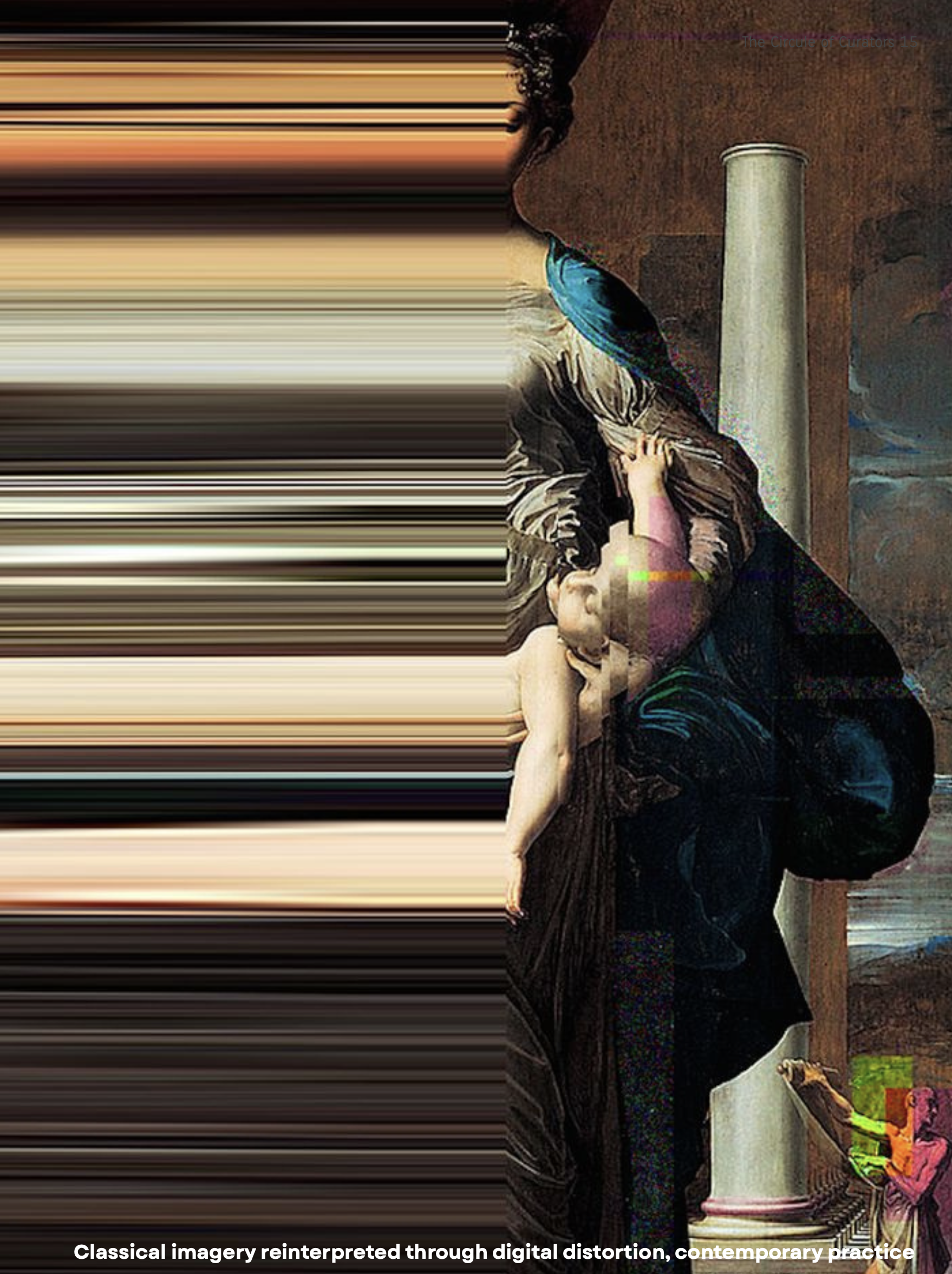
At the convergence of artistic imagination and technological innovation, digital art has reshaped the way contemporary culture produces, circulates, and understands images. No longer confined to traditional materials or spaces, artistic practice has expanded into a fluid, evolving territory where code, data, and virtual environments operate as both medium and language.
In this context, artists are not simply adopting new tools but redefining the very conditions of creation. Digital systems allow for processes that are dynamic rather than fixed — works that transform over time, respond to input, or exist across multiple formats simultaneously. This shift has opened a field of experimentation where visual art intersects with sound, movement, and interaction, dissolving long-standing boundaries between disciplines.
Equally significant is the way digital art has altered the relationship between artist, artwork, and audience. Through online platforms and networked environments, works can circulate globally with unprecedented speed, reaching audiences far beyond the institutional frameworks of galleries and museums. The viewer, in many cases, becomes an active participant, engaging with works that are responsive, immersive, or collectively generated.
This expanded accessibility has also contributed to a broader transformation of the art market. Digital formats — particularly those linked to blockchain technologies — have introduced new models of ownership and distribution, challenging established systems while raising complex questions about authenticity, value, and permanence. In a medium where reproduction is inherent, the notion of the “original” becomes increasingly unstable, prompting both artists and institutions to rethink how art is defined and preserved.
At the same time, digital art continues to engage critically with its own conditions. Many artists explore the tensions between virtual and physical realities, between visibility and control, or between technological progress and its social implications. In doing so, they reveal the digital not as a neutral tool, but as a space shaped by cultural, political, and economic forces.
Looking ahead, the integration of emerging technologies such as artificial intelligence, virtual reality, and augmented environments suggests an even more expansive horizon. These developments are not only extending the possibilities of artistic production but also redefining how art is experienced — shifting from passive observation towards fully immersive and interactive encounters.
Institutions, for their part, are gradually adapting to this transformation. Major museums and galleries are incorporating digital works into their collections, while new exhibition formats and specialised fairs continue to emerge. This institutional recognition reflects a broader acknowledgement: that digital art is no longer peripheral, but central to understanding contemporary artistic practice.
Ultimately, digital art does not represent a break with tradition so much as a reconfiguration of it. It retains the fundamental impulse of art — to question, to communicate, to imagine — while operating within a landscape that is increasingly shaped by technology. In this evolving terrain, the challenge is not only to create new forms, but to rethink the structures through which art exists and acquires meaning.