
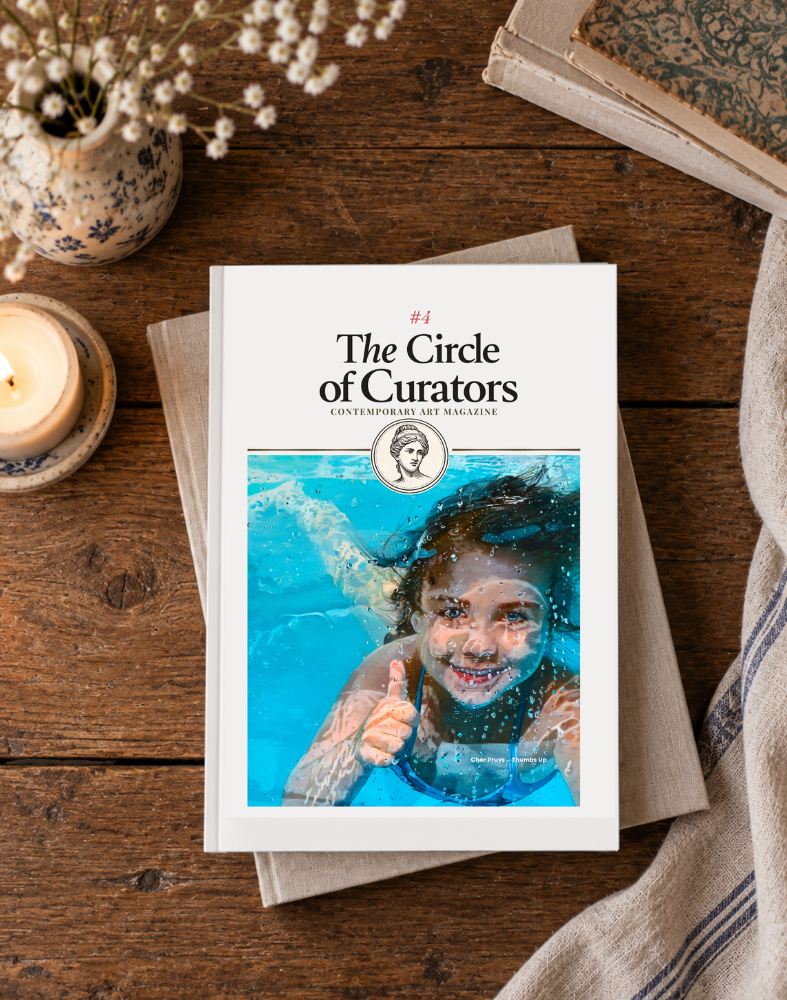
October–November 2026 | Contemporary Art Magazine
The fourth issue of The Circle of Curators Magazine is now available to read online.
Published in October 2026, the new edition contains 92 pages of contemporary art, with contributions from international artists working in painting, sculpture, digital art, textiles, assemblage and mixed media. It also includes a report on EuropArtFair 2026 in Maastricht and a preview of Paris Photo 2026.
There is no single theme running through this issue. The artists come from different countries and generations, and their work has developed in very different circumstances. Some have spent decades refining a particular technique, while others move freely between materials and disciplines.
We have approached each contribution individually, considering how best to present the work without trying to fit it into a broader narrative. That has been our approach since the first issue, and it remains central to how we put the magazine together.
On the Cover: Cher Pruys
Our October–November cover features Thumbs Up by Canadian hyperrealist painter Cher Pruys.
The painting shows a smiling child underwater, giving a thumbs-up as reflections ripple across the surface. The blue of the water is particularly striking, but it is the smaller details that hold your attention: the distortion of the child's features, the changing light and the movement suggested by the water.
It is easy to mistake the image for a photograph. In fact, it is an acrylic painting, executed with the extraordinary precision for which Pruys has become known.
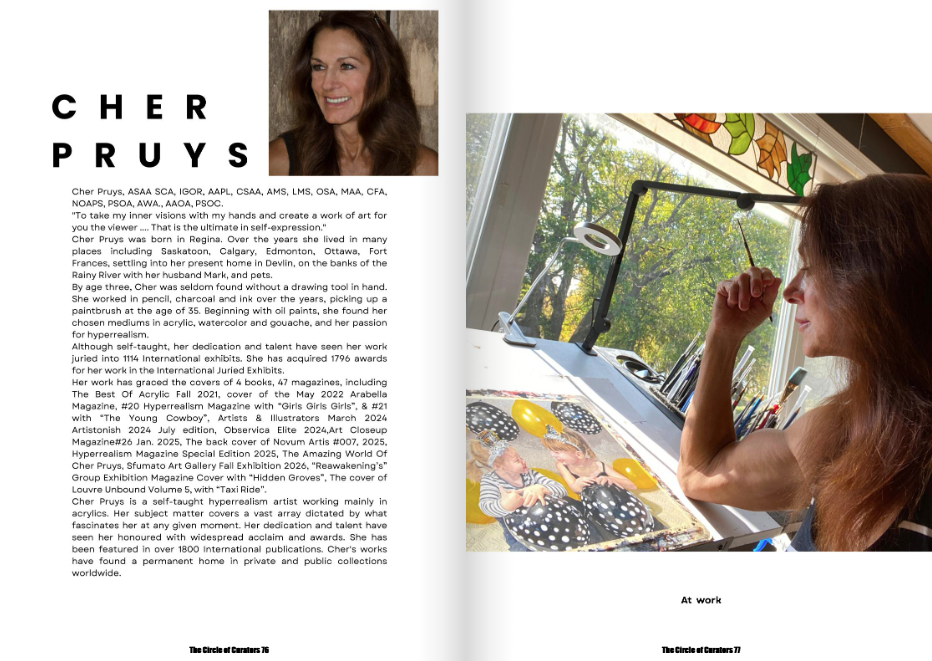
Born in Regina, Saskatchewan, Pruys began drawing at an early age, working with pencil, charcoal and ink before taking up painting at 35. Largely self-taught, she has since exhibited internationally and received numerous awards for her work.
Her choice of subjects is wide-ranging. Portraits, animals, landscapes, reflections and ordinary objects all appear in her paintings. She seems particularly interested in the visual details that can easily escape our attention, whether that is the reflection on a polished surface or the way light falls across a face.
Inside the magazine, we present a selection of her work alongside information about her career and artistic development.
Inside the Fourth Issue
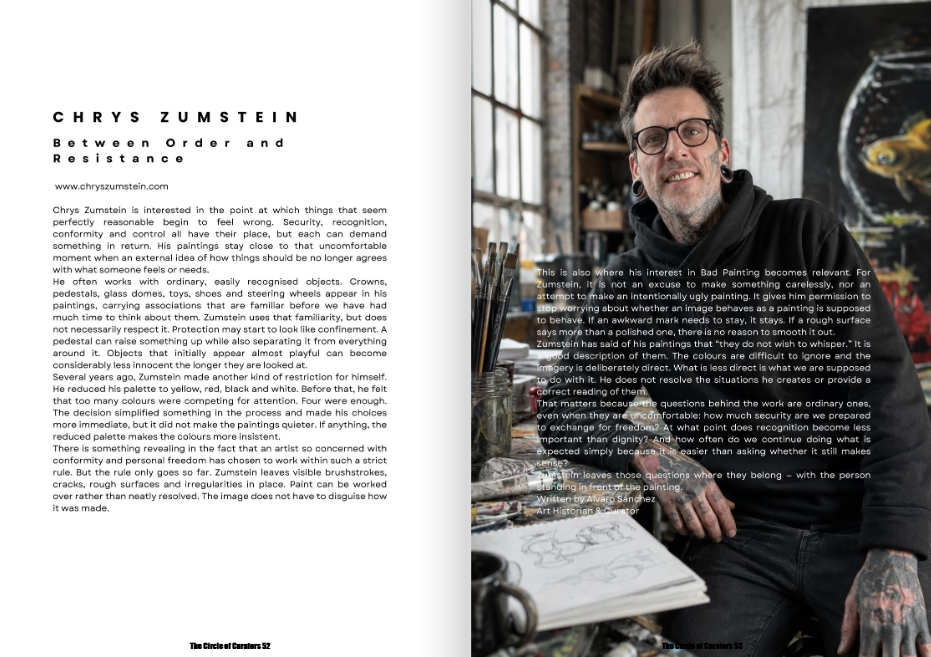
Much of the magazine is devoted to its featured artists. Their work is presented through individual profiles, selected images, biographical information and, in several cases, original curatorial essays.
The range of materials is particularly interesting in this edition. Alongside painting and digital art, there are sculptural works assembled from objects found along the shoreline and pieces created through traditional weaving techniques. In some cases, the material itself is the starting point; in others, the artist begins with an image, a memory or an idea that gradually takes shape.
The subjects are equally varied. Questions of identity, belonging and personal freedom appear alongside explorations of memory, spirituality, observation and the natural world.
Not every work needs an elaborate explanation. Some are best approached through their images, while others benefit from knowing something about the artist's background or the circumstances in which they were made. We have tried to make room for both.
Readers will find established artists alongside names they may not have encountered before. Discovering unfamiliar work is one of the pleasures of editing the magazine, and we hope it will be just as interesting for those reading it.
We will also be publishing individual articles about the participating artists on our website over the coming weeks, with a closer look at their work and careers.
EuropArtFair 2026: Maastricht
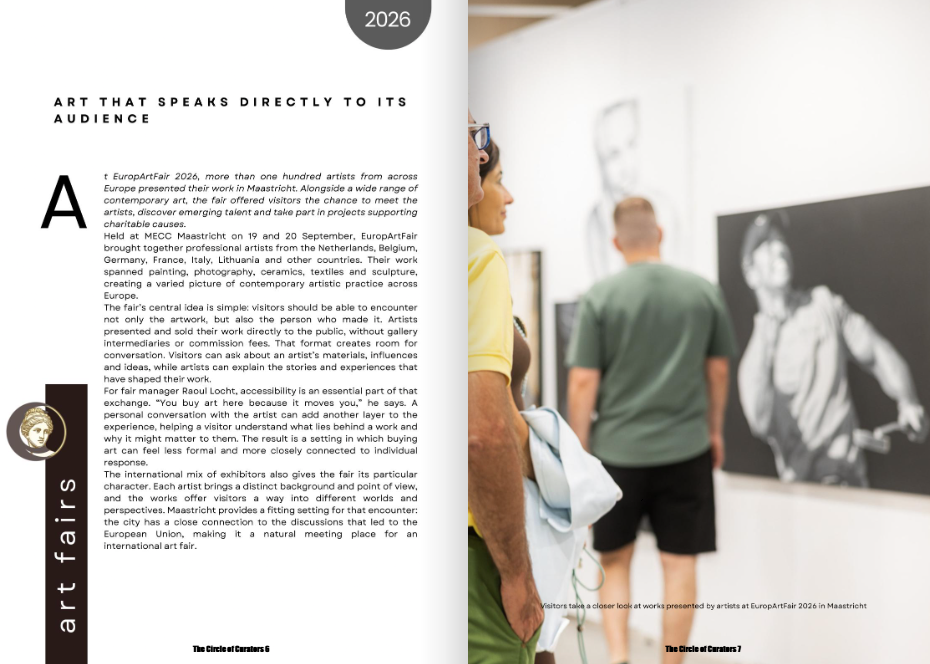
On 19 and 20 September, more than one hundred artists gathered at MECC Maastricht for EuropArtFair 2026.
The fair brought together exhibitors from the Netherlands, Belgium, Germany, France, Italy, Lithuania and elsewhere in Europe, with work ranging from painting and sculpture to ceramics, photography and textiles.
One of the things that distinguishes EuropArtFair is the opportunity to meet the artists themselves. Visitors can speak directly to the people responsible for the work, ask about their techniques and influences, and hear how particular pieces came about.
For someone considering buying an artwork, that conversation can make a considerable difference. It can also be valuable for visitors who simply want to understand more about what they are looking at.
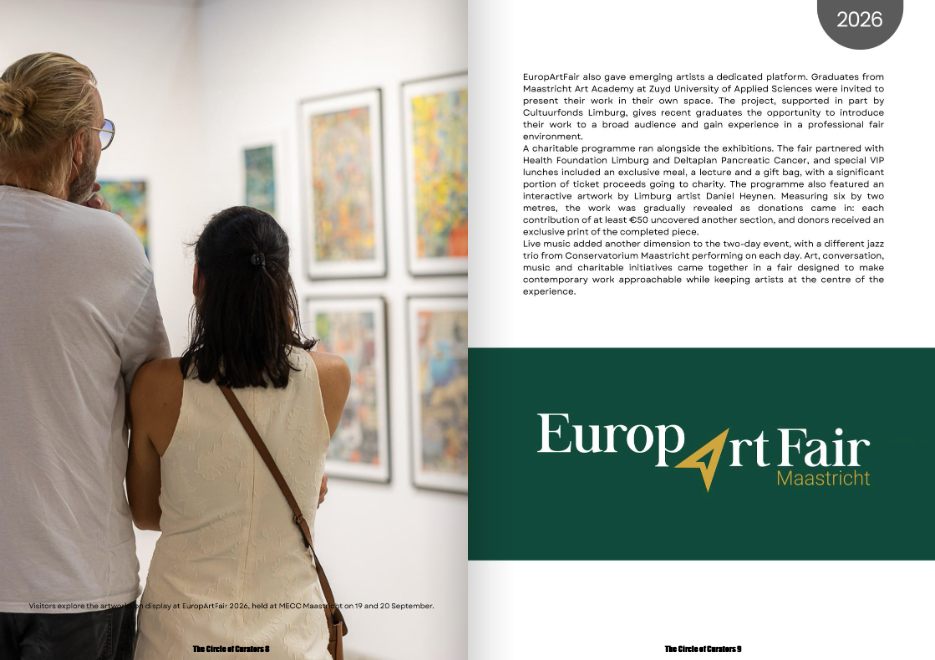
The September edition included a space dedicated to graduates from Maastricht Art Academy, giving recently qualified artists an opportunity to present their work to a wider audience.
There was also a charitable programme involving Health Foundation Limburg and Deltaplan Pancreatic Cancer. Among its projects was an interactive artwork by Limburg artist Daniel Heynen, measuring six by two metres, which was gradually uncovered as donations were made.
Music formed part of the weekend too, with jazz trios from Conservatorium Maastricht performing during the event.
Our report includes photographs from the fair and looks at the role of direct contact between artists and visitors in an increasingly varied European art market.
Paris Photo 2026: Photography at 200
The November art calendar takes us to the Grand Palais in Paris, where Paris Photo 2026 will run from 12 to 15 November.
This year's edition coincides with the bicentenary of photography, an anniversary that raises some interesting questions about the medium.
Photography has never been entirely fixed in its methods or purpose. From early chemical processes to digital cameras and computer-generated imagery, technological developments have repeatedly changed what photographers can do and how their images are understood.
Today, with artificial intelligence becoming part of image production, those questions are particularly relevant.
Paris Photo's 29th edition will bring together 246 exhibitors from 38 countries. Historical photography will be shown alongside contemporary work, with galleries, publishers and institutions contributing to a programme that moves between the medium's past and present.
A major installation devoted to Thomas Ruff will occupy 36 metres at the entrance to the fair. Covering more than four decades of his work, it will introduce visitors to an artist who has consistently explored the changing possibilities of photographic images.
The Digital Sector, curated by Marco de Mutiis, will examine the influence of software, social media, networked technologies and artificial intelligence.
Another section, Voices, curated by Zasha Colah and Francesco Zanot, will take disappearance as its subject. Historical photographs made to preserve things at risk of being lost will appear alongside contemporary work concerned with vulnerable communities, threatened landscapes and the passing of time.
The programme also includes presentations by emerging artists, photographic publishers and institutions, including the Centre Pompidou.
Our preview considers what visitors can expect from this year's fair and how its bicentenary programme brings older photographic practices into conversation with some of the most recent developments in image-making.
From the Editorial Desk
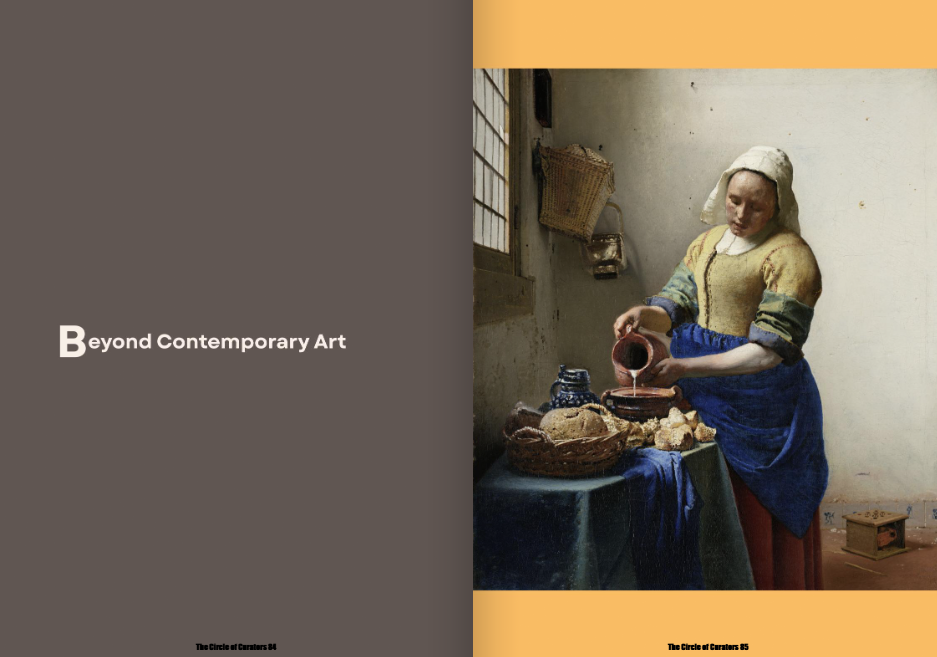
Every issue takes shape gradually. We begin with artists' submissions, portfolios and conversations, often without knowing exactly how the finished magazine will look.
There are images to select, texts to prepare, details to check and pages to arrange. Some artists' work is familiar to us from the outset; other contributions lead us into areas we have not previously explored.
By the time an issue is ready, we have usually spent several weeks looking closely at work that was entirely new to us at the beginning.
That is one of the reasons we continue to publish The Circle of Curators. A magazine gives us the opportunity to spend time with artists and their work, rather than treating each image as something to be seen briefly before moving on to the next.
We would like to thank everyone who has contributed to this fourth edition, particularly the artists who have shared their work and trusted us with its presentation.
We hope readers will enjoy discovering the new issue.
Read Issue 4 Online
The Circle of Curators Magazine — October–November 2026
92 pages of contemporary art, artist features, curatorial writing and international art-fair coverage.
The complete issue is available to read online, free of charge.
The Editorial Team
The Circle of Curators Magazine
Published by CCPress
www.circleofcurators.com
Instagram: @circleofcurators